Selected Projects
This selection brings together projects spanning brand strategy, consumer research, marketing analytics, product innovation and cultural initiatives. Across them, I have used both qualitative and quantitative methods to identify meaningful insights and translate them into concepts, positioning strategies and practical recommendations. They reflect my ability to collaborate within multidisciplinary teams, respond to real company briefs and present ideas clearly to both academic and professional audiences.
This research investigated how theatres in Milan could attract Gen Z audiences and convert occasional attendance into a lasting habit. A survey distinguished between theatre-goers and non-attenders, enabling to examine their behaviours, motivations, barriers and expectations through regression, factor, cluster and conjoint analysis in SPSS.
The results challenged the assumption that young people are disengaged from culture. Respondents were active consumers of cinema, museums and live music, yet theatre remained largely episodic: approximately 40% had not attended during the previous year, while another 39% had attended only one to three times.
The study identified three central obstacles. First, an information gap: non-attenders often did not know what was available, while unclear descriptions made it difficult to understand what a performance would actually feel like. Second, price strongly influenced the decision, with affordable and flexible options preferred over long-term subscriptions. Third, theatre was perceived as a social rather than purely cultural choice: around 60% of respondents preferred attending cultural activities with friends, making coordination, peer recommendations and shareability particularly important.
The findings were translated into three strategic directions: clearer, short-form communication showing the atmosphere of each production; frictionless youth pricing and socially oriented theatre experiences; and segment-specific CRM initiatives, including flash sales, referral-based access and loyalty mechanics.
This project addressed a strategic challenge: how could Intercos identify emerging opportunities beyond traditional beauty, translate them into actionable insights and develop an innovation with credible market potential?
Our research identified cycle-adaptive skincare as a compelling white space at the intersection of clinical efficacy, personalised wellness and ritual-driven beauty. While femtech, nutrition and supplement brands had already familiarised consumers with phase-based routines, no established skincare brand had successfully created an integrated system responding to cyclical changes in the skin. Social media analysis reinforced this finding: conversations around hormonal and cycle-based skincare were being led primarily by wearable and supplement brands rather than by beauty companies.
The insights from desk research, competitive mapping, consumer interviews and persona development led to LUNA/MENU, a four-phase adaptive skincare system mapped to the menstrual cycle. The proposed product line, Reset, Recharge, Boost and Soothe, combines a consistent scientific foundation with ingredients and functions tailored to each phase. Rather than framing hormonal skin as a problem to correct, the concept positions it as a changing biological rhythm that can be understood and supported.
The final positioning combined scientific credibility, adaptive personalisation and an accessible digital-first experience. The proposal also addressed implementation risks, including scientific overclaiming, cycle irregularity and data privacy, through flexible usage guidance, responsible cosmetic claims and optional rather than mandatory cycle tracking. The result was not simply a product range, but a new beauty proposition connecting skincare with growing consumer interest in body literacy, personalisation and evidence-based wellness.
Developed for the GDO Week Think Tank Award and published on its digital platform, AUREA explores how physical retail can make the rapidly expanding world of wellness technology more accessible, credible and human. The project focuses on designing an innovative retail format, complete with its positioning, target audience, assortment, layout and customer experience.
The research identified a clear gap in the European market. Consumers increasingly use apps, wearables and connected devices to improve their sleep, health, appearance and mental wellbeing, but these products are usually sold either online, without sufficient guidance, or through general electronics retailers that offer limited opportunities for meaningful trial.
To address this gap, we created AUREA: a premium but approachable phygital wellbeing store where customers can understand, test and experience self-care technologies before purchasing them.
The approximately 200-square-metre format was designed around specialist guidance and short, practical experiences. Customers can then continue their routines through an accompanying digital ecosystem, book future sessions and access a tiered membership programme.
Rather than treating the store as a conventional product showroom, the strategy positions it as a hands-on wellness laboratory. Events, expert partnerships, workplace activations and digital content help transform initial curiosity into product confidence, repeat visits and longer-term habits.
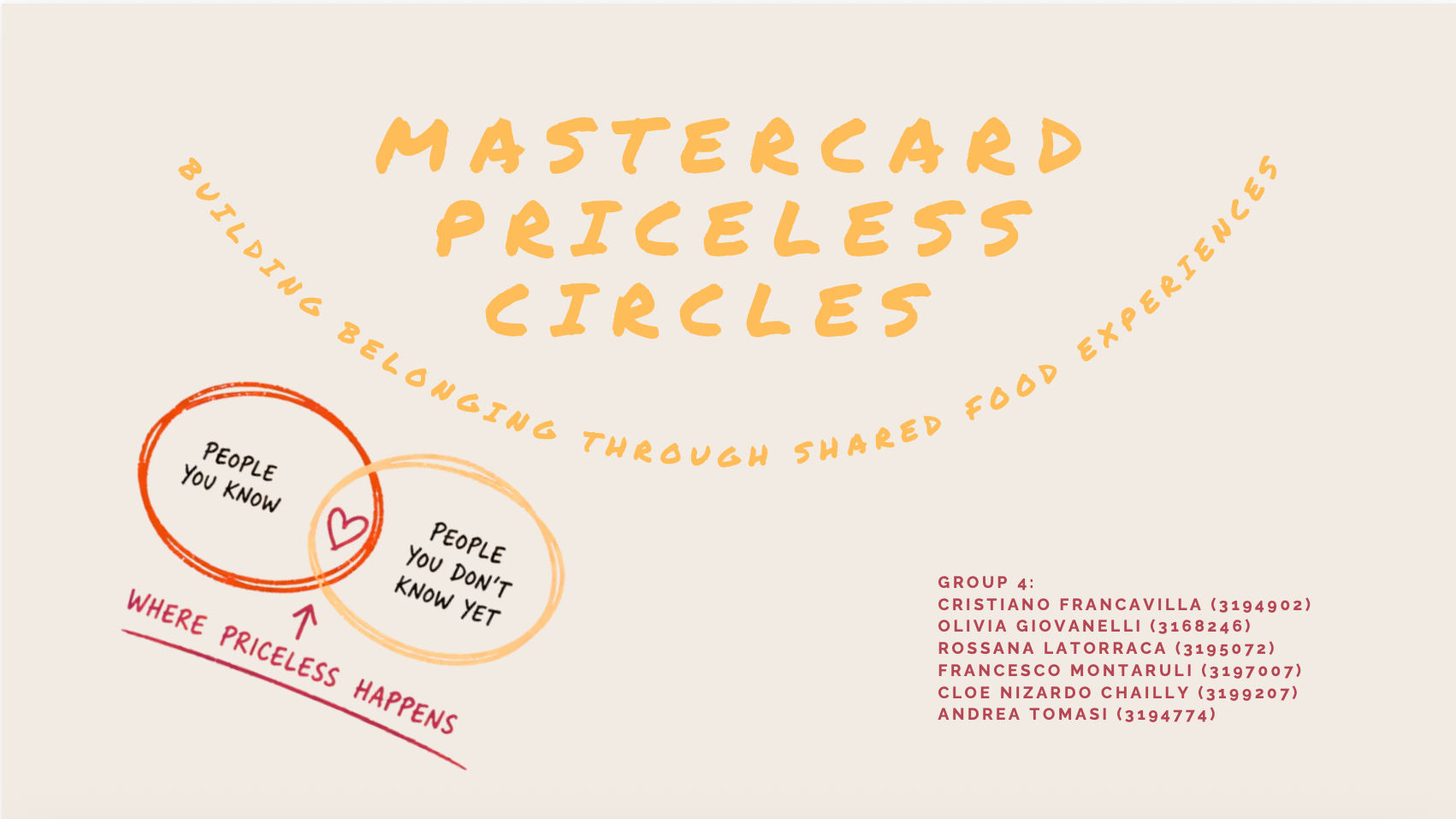
Developed in response to a live Mastercard brief and presented directly to the company, this project explored how Mastercard Priceless could use culinary experiences to build preference among European consumers aged 25–35.
Our research revealed a significant communication gap: 73.8% of respondents were unaware of Mastercard Priceless despite showing interest in experience-based card benefits. It also challenged conventional ideas of premium dining. For this audience, food was primarily a means of connection, with 69.4% associating dining out with spending time with friends or a partner. Rather than simply seeking lower prices, they valued experiences whose social and cultural benefits justified the cost.
These insights led us to redefine Priceless from exclusive access to curated connection. We developed Priceless Circles, a scalable ecosystem supported operationally by TheFork and comprising three formats:
City Tables: premium dinners connected to major cultural moments such as Fashion Week, Design Week and film festivals.
Cook Together: participatory experiences where small groups prepare and share food with a local host.
Drinks for Thought: accessible tastings hosted by independent producers as an entry point into the wider ecosystem.
Together, the formats created a journey from accessible discovery to premium cultural experiences, preserving Mastercard’s aspirational positioning while making it more contemporary, relatable and locally relevant.
Developed in response to a live brief from Winni’s, this project explored how the brand could preserve its authentic green identity while regaining differentiation as sustainability becomes increasingly mainstream.
Through interviews and a focus group, we investigated a persistent consumer tension: sustainable cleaning products are considered ethical and safe but are often perceived as less effective than traditional alternatives. Conventional detergents provide sensory evidence, such as strong fragrance, foam and visible action, that consumers interpret as proof of performance. Winni’s was recognised as a sustainability pioneer, yet its packaging was perceived as dated, crowded and too similar to that of conventional chemical products.
Our research also revealed that “deep clean” was associated not with aggressive chemicals, but with order, light, simplicity and a sense of reset. These insights informed A Deeper Green, a strategy combining sustainability with a more contemporary and performance-oriented identity.
The proposal included redesigned bio-based packaging with a clearer visual hierarchy and a collaboration with 24Bottles to turn refilling into a visible, desirable ritual. A network of refill points, including mobile vans, laundromats and Humana Vintage stores, would integrate sustainable behaviour into places already frequented by younger consumers.
Finally, direct educational communication would explain biofermentation, environmental impact and product effectiveness through visual demonstrations, activations and social content. The strategy repositioned Winni’s as a modern and credible brand capable of making sustainable cleaning easier, more visible and more habitual.
As a project in Strategic Marketing and Analytics, this study explored how SMEG could increase customer reviews while strengthening engagement and preserving its premium positioning.
We designed an experimental field test comparing three conditions: no incentive, a discount and a charitable donation triggered by submitting a review. After data cleaning, the analysis included 139 valid observations. OLS and Logit regression analyses were conducted in Python while controlling for demographic variables.
Both incentives significantly increased participants’ likelihood of leaving a review, but the charitable donation produced the strongest effect. It increased stated likelihood by 1.84 points on a seven-point scale, compared with 1.26 for the discount, an estimated 26% uplift, or approximately 260 additional reviews per 1,000 customers. Demographic characteristics were not statistically significant, suggesting that the incentive itself was the main driver.
These findings informed SMEG for Good, a post-purchase ecosystem that transforms customer feedback into social value. Customers would receive a QR-enabled invitation to leave an authentic review, with each submission activating a donation funded by SMEG and contributing to a collective impact tracker.
More detailed reviews would also generate symbolic SMEG Credits, unlocking brand-aligned experiences such as culinary masterclasses, cultural events and limited-edition previews. The resulting strategy turned reviews from a functional acquisition tool into a mechanism for purpose-driven loyalty, allowing charitable participation and premium recognition to coexist.
My Bachelor’s thesis explored Corporate Theatre, an experiential approach that applies theatrical techniques to corporate training, organisational development and cultural transformation. The research examined how theatre can strengthen communication, creativity, leadership, emotional intelligence and collaboration in ways that traditional classroom-based training often cannot.
The first part of the thesis defined the Italian Teatro d’Impresa model, tracing its origins, pedagogical foundations and different methodologies. These range from performances created for employees to more participatory formats involving role-play, improvisation and collective reflection. The analysis also considered its limitations, including the difficulty of measuring long-term impact and the risk of reducing complex organisational issues to superficial exercises.
The research then expanded beyond the Italian context through two international cases: Augusto Boal’s Theatre of the Oppressed in Brazil and the Jana Sanskriti movement in India. Although these practices were not designed specifically for corporate training, they demonstrated theatre’s broader ability to encourage dialogue, participation and collective change.
The final section applied these insights to Teatro Franco Parenti in Milan. I analysed the theatre’s existing educational activities and identified several competitive advantages: its cultural reputation, professional artistic expertise, distinctive venues, operational flexibility and ability to offer experiences with greater symbolic and emotional depth than conventional training providers.
To define a viable market position, I benchmarked three different models, Te.D.–Teatro d’Impresa, ISFOR and SDA Bocconi, representing specialised theatrical training, broad corporate education and prestigious executive development. The comparison indicated that Teatro Franco Parenti could occupy a distinctive position as a premium cultural partner, combining the artistic depth of a theatre with the structure and credibility required by corporate clients.
I then assessed organic and partnership-led growth alternatives. The thesis concluded that organic growth offered the most coherent path, allowing the theatre to scale its activities without diluting its identity or surrendering control to a generalist training intermediary.
The final proposal centred on three actions: introducing Teatro Franco Parenti-branded certifications to give participants a tangible professional outcome; transforming existing corporate sponsorships into hybrid agreements that also include employee training; and pursuing accreditation for interprofessional training funds, making programmes more financially accessible to companies.
This project was developed in response to a simulated public call from the City of Milan. Tra le Mani di Milano addressed the gradual disappearance of historic and artisanal businesses in the city centre.
Our research identified two connected challenges. Many traditional shops lack the resources and visibility required to reach new customers, while others risk closing because their owners cannot find a younger generation willing to continue their specialised work. Their disappearance would represent not only an economic loss, but also the erosion of craftsmanship, neighbourhood relationships and cultural knowledge that contribute to Milan’s identity.
We combined demographic and secondary research with a survey of 320 respondents and interviews with shop owners and relevant local stakeholders. Although 83.8% considered supporting small and traditional businesses highly important, only 16% visited them frequently. Lack of time and limited information about where to find these businesses emerged as the main barriers. At the same time, 95.9% believed that their closure would damage Milan’s cultural heritage, and 83.1% expressed interest in participating in an open-day initiative.
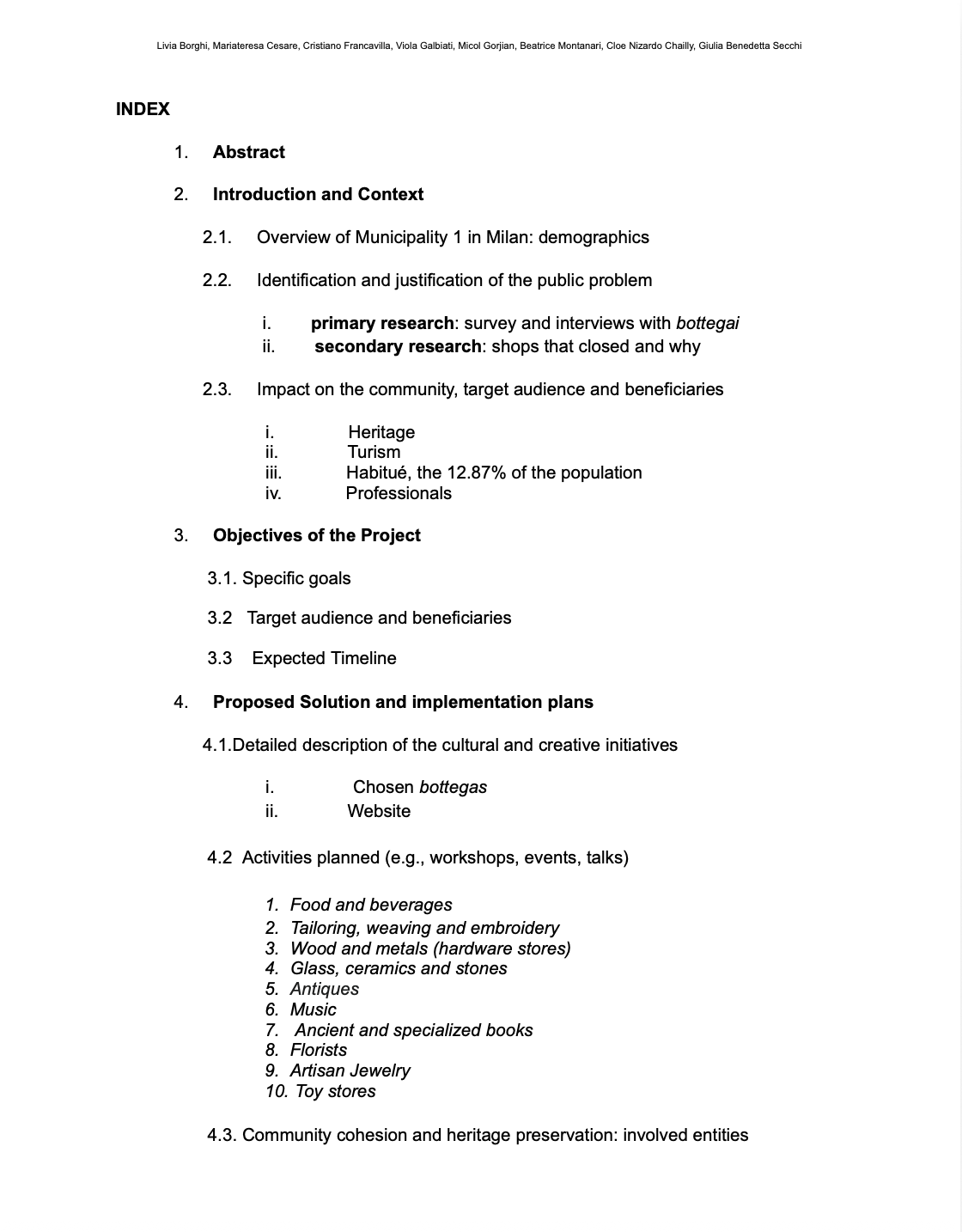
These findings informed Tra le Mani di Milano, a cultural event and permanent digital network connecting approximately 60 businesses across Municipality 1. The selected categories included food, tailoring, textiles, metalwork, ceramics, antiques, music, specialist books, floristry, jewellery and traditional toy stores.
During the proposed launch event, participating businesses would open their spaces to workshops, demonstrations, talks and interactive activities. Visitors would follow thematic routes and collect stamps in a physical “passport”, encouraging them to explore different areas and businesses before meeting at a final Milanese aperitivo. A dedicated website would provide shop profiles, maps, workshop reservations and opportunities for continued discovery after the event.
The proposal also addressed generational turnover by connecting experienced artisans with students and young professionals interested in developing specialist skills. Partnerships with schools, professional associations, local media, cultural organisations and private sponsors were incorporated to strengthen legitimacy and make the initiative financially viable.
The final proposal included an implementation timeline, communication strategy, partnership structure, financial plan and evaluation framework. Success would be measured through attendance, website engagement, workshop participation, business feedback, repeat surveys and longer-term changes in visits and sales. If successful, Tra le Mani di Milano could become an annual initiative and a permanent route through the living heritage of the city.